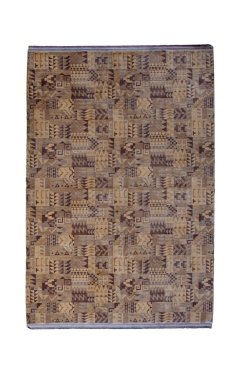
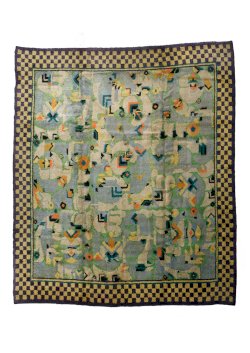
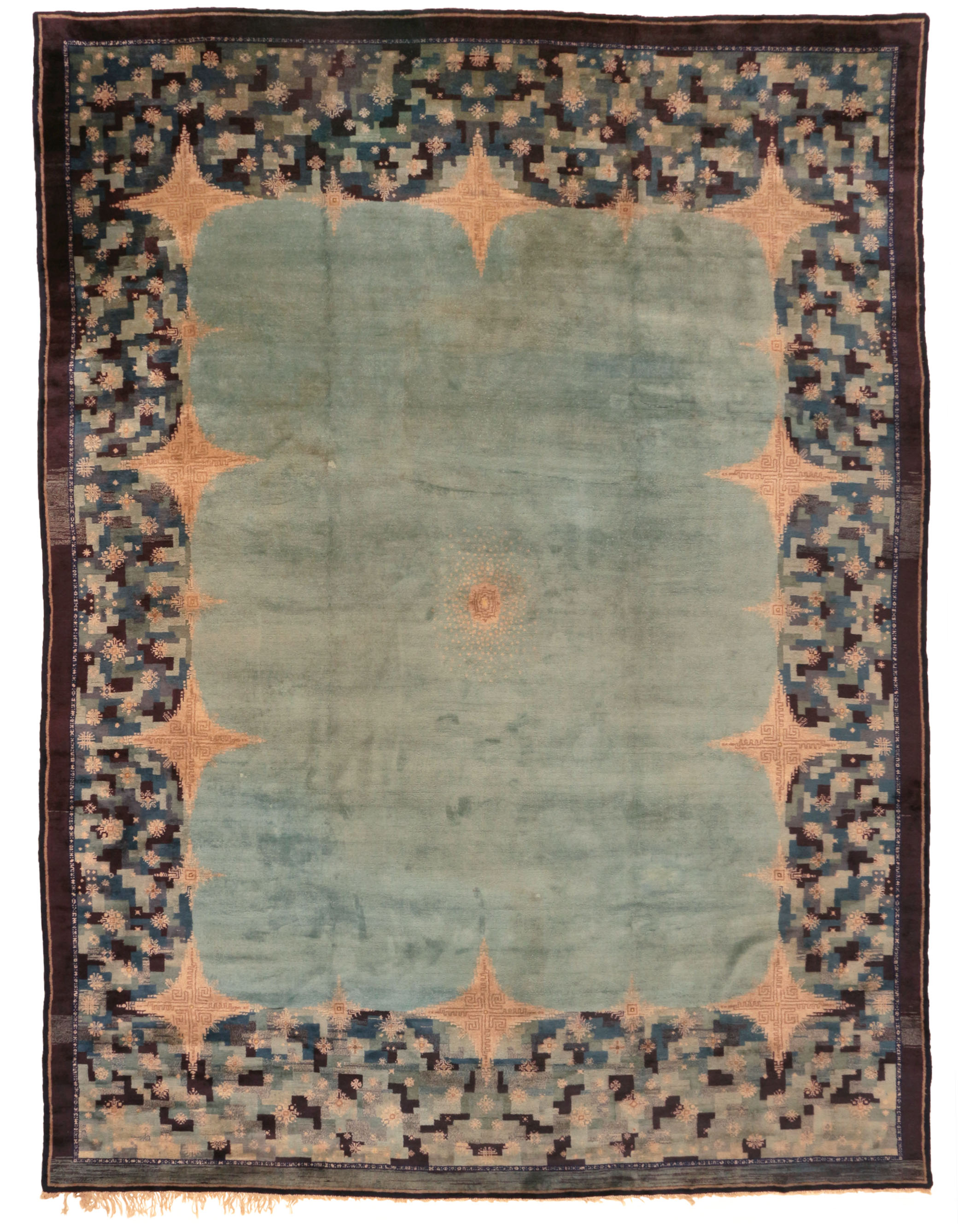
Kinheim rug
REF.: R40800
Kinheim rug
| Price range: | More than €25.000,00 |
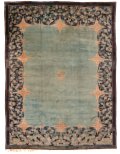
| Description: | Kinheim rug |
| Dimensions: | L527xB403 |
| Origin: | Europe, The Netherlands |
| Period: | 1880-1940 |
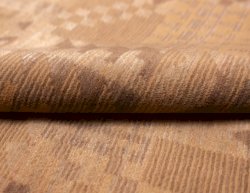
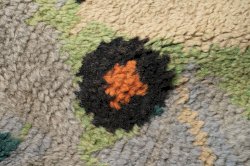
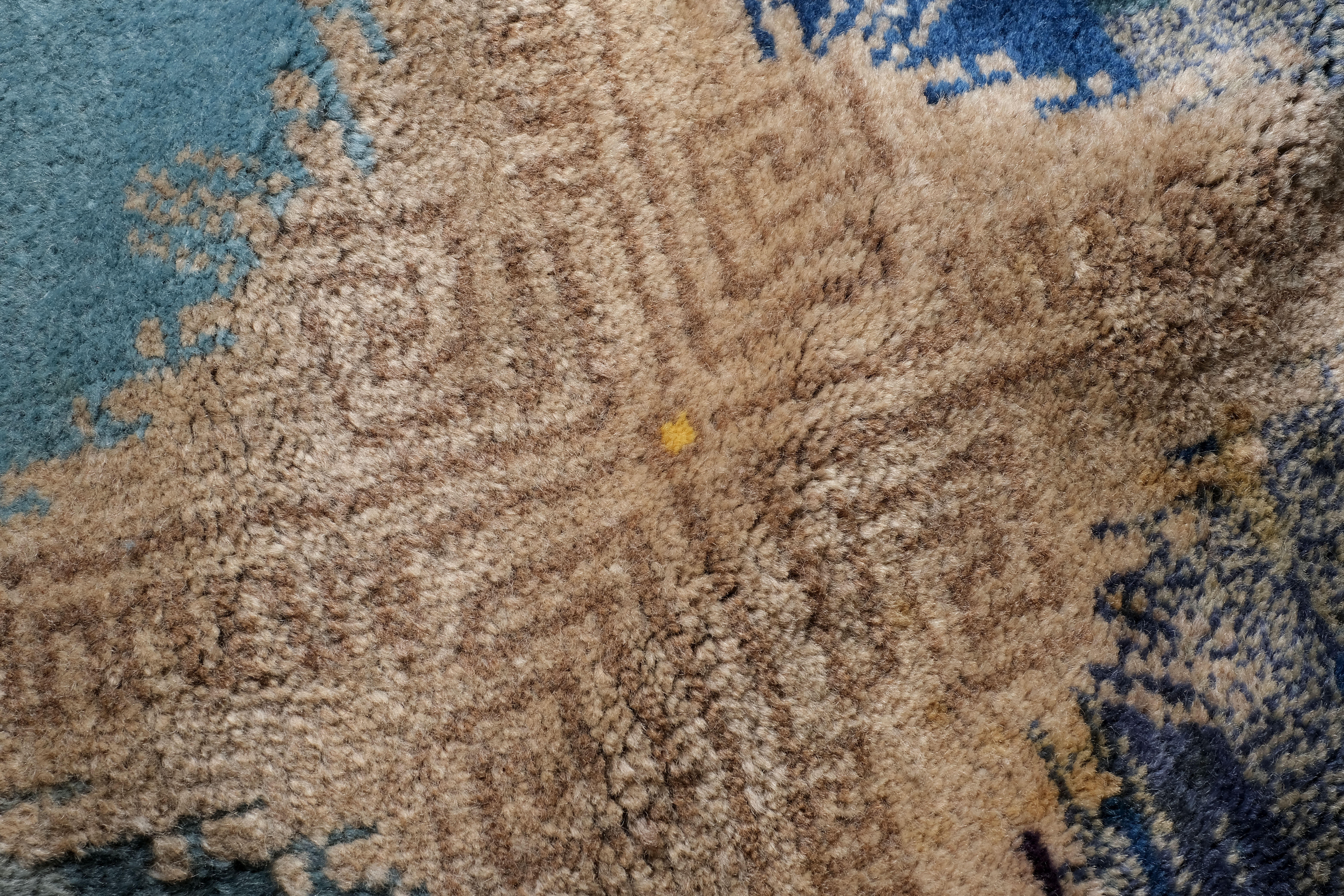
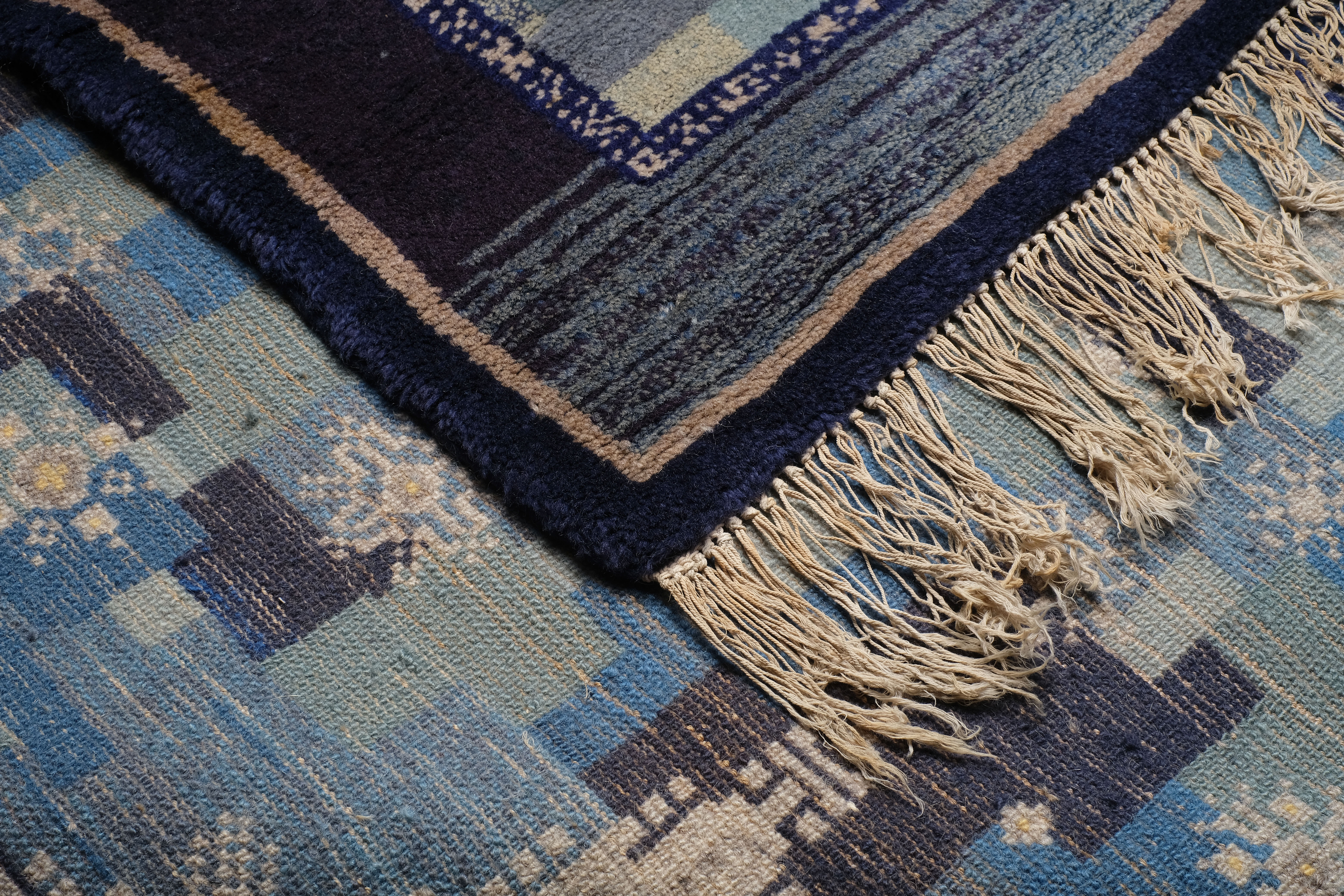
| Medium: | pile: wool / warp and weft: cellulose |
| Technique: | Hand knotted |
Coulours may appear different on the website than in reality. All mentioned prices and sizes are indicative and not binding. Possibly some rugs that are still online, are not available anymore in the showroom.
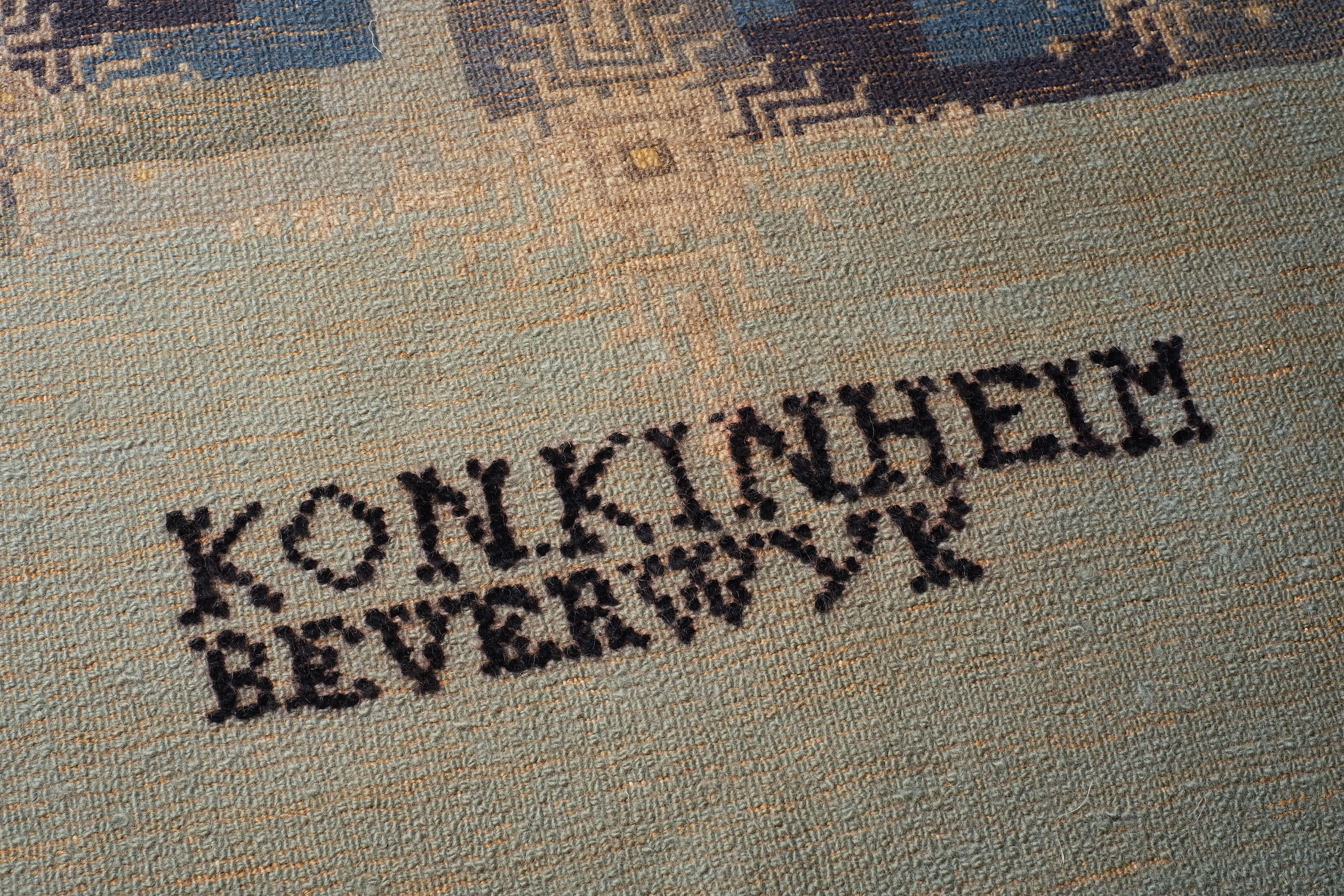
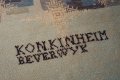
In parallel with the “Koninklijk Vereenigde Tapijtfabrieken” of Moordrecht, Rotterdam, Amsterdam and Deventer, carpets were also produced in the hand-knotted carpet workshop Kinheim in Beverwijk.
This workshop was founded in 1910 by Hendrik Godefridus Polvliet and within ten years the company had gained a strong reputation throughout the Netherlands for its quality and artistic originality. Its own designs, inspired by Oriental motifs, quickly found their way onto boats, into palaces, private residences and council chambers.
On 19 May 1926 the company was granted the designation “Royal”. The founder himself did not live to see this honour, as he died on 17 June 1923. His widow, Cornelia Maartina Polvliet-Hoogstraaten, continued the business, which then took the name Royal Hand-knotted Carpet Workshop “Kinheim”.
After an initial period of prosperity, the workshop suffered a setback as a result of the First World War. This was followed by a strong revival in the 1920s. The large number of commissions at that time provided work for more than 60 girls and women. During the economic crisis of the 1930s, the company managed to survive by focusing on simpler techniques. In this period, it produced the cheaper “konkita carpet”, which was woven with coarse knots using undyed material.
During the Second World War, the company, which had passed into the hands of Mr Keizer from Hilversum in 1941, came to a standstill.
After 1945, activities were resumed under the management of Mr and Mrs Mastenbroek. Numerous large commissions were then carried out for government buildings, ships and companies. On average, the company employed 30 to 40 women, although this number sometimes rose to around 60.
Due to changing tastes and altered economic circumstances, demand for hand-knotted carpets declined sharply. Hand-knotted carpets were increasingly replaced by much cheaper, machine-made floor coverings. Kinheim carried out its last commission at the beginning of 1973. In April of that year, the workshop in Beverwijk was closed.
On the back of the earliest Kinheim carpets a swastika-like motif can be seen. In this context, this sign refers to the age-old symbol of good fortune and not to the more charged meaning it acquired through the history of the 20th century. After 1926, the swastika was replaced by a crown. The crown refers to Kinheim’s royal designation and in effect serves as a kind of quality mark or brand emblem.
The museum value of Kinheim carpets can also be measured by the number of pieces that form part of the collections of major museums in the Netherlands. For this reason, research was done to catalogue the known rugs. So far, it is known that the Rijksmuseum owns 4 carpets, the Amsterdam Museum 2, and the TextielMuseum in Tilburg 7.