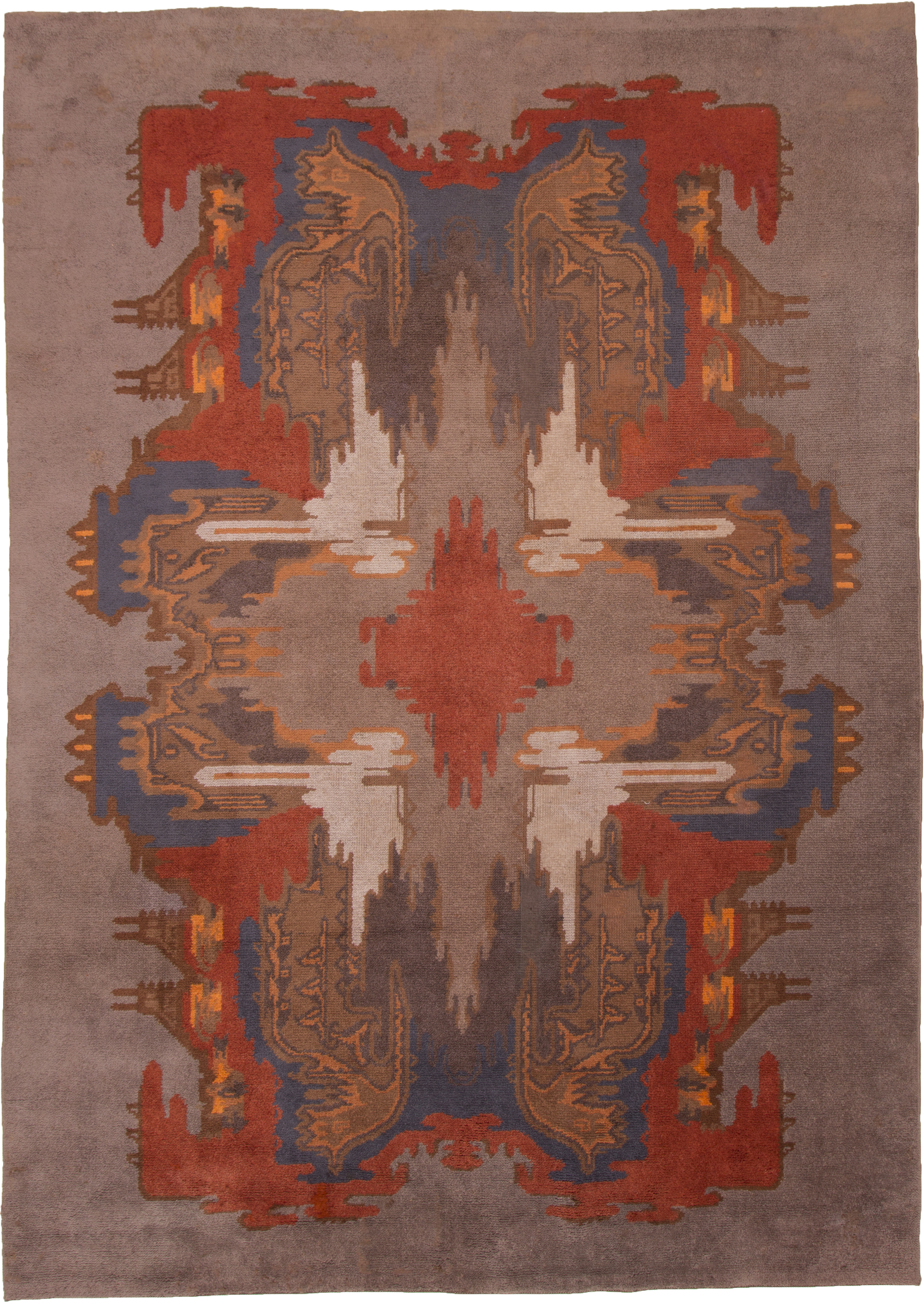
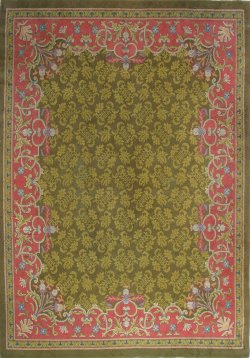
'Silma 5012'




REF.: R39043
'Silma 5012'
| Price range: | More than €25.000,00 |
| Description: | 'Silma 5012' |
| Dimensions: | L390xB290 |
| Origin: | Europe, The Netherlands |
| Period: | 1880-1940 |
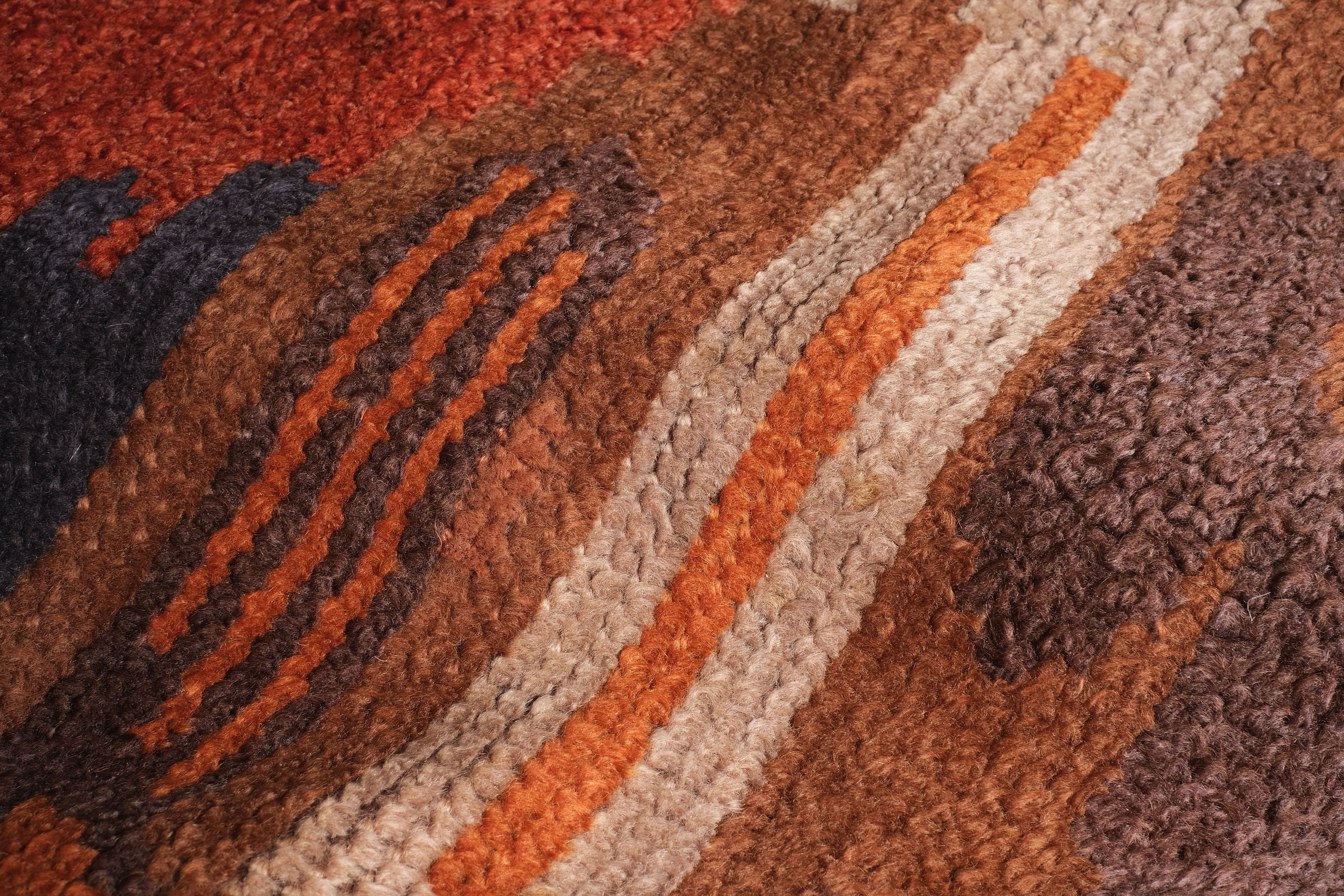
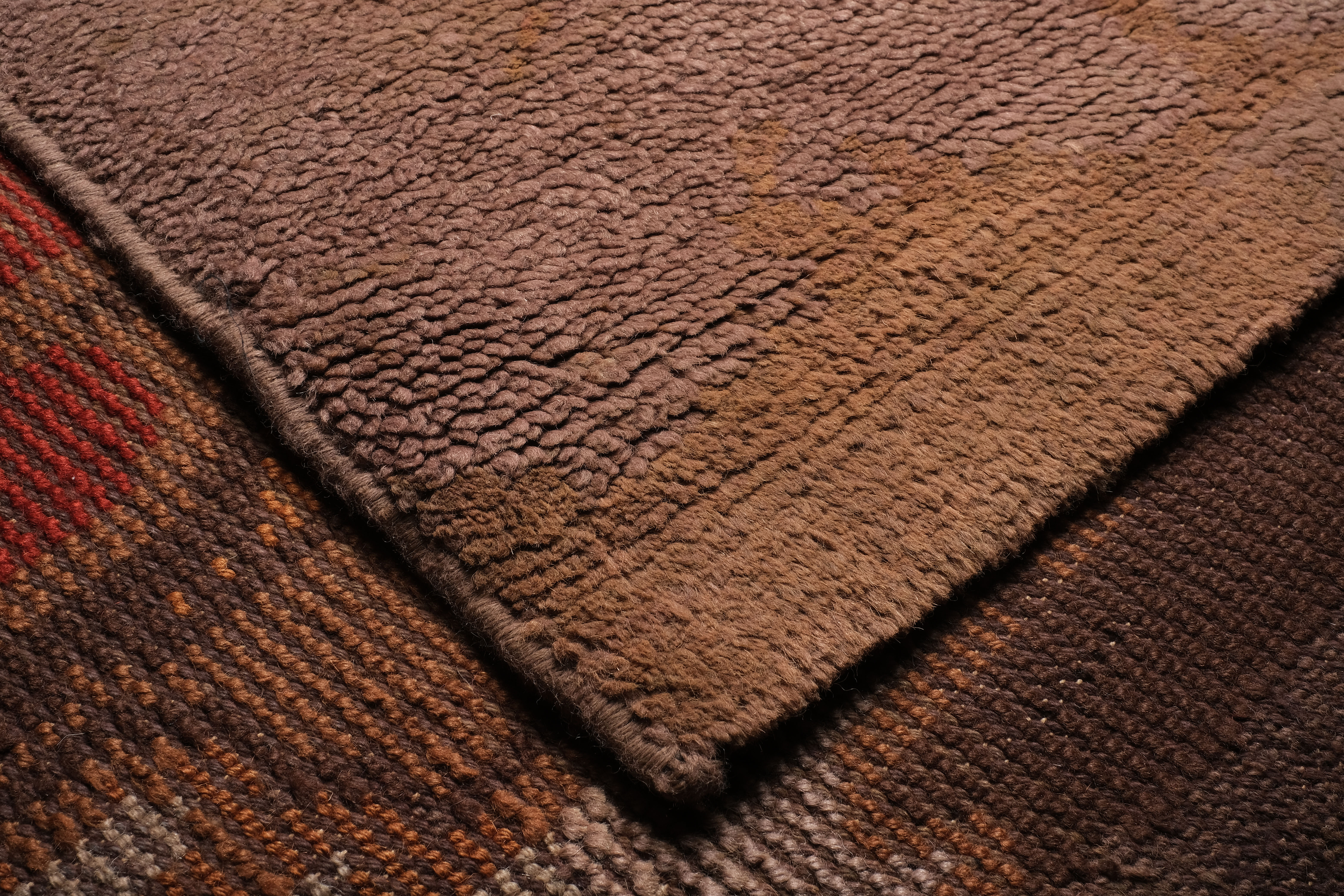
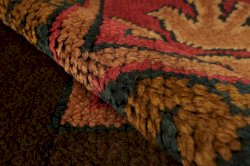
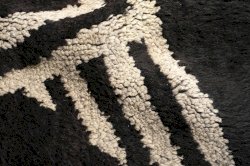
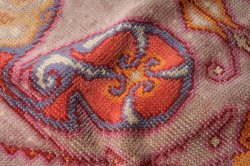
| Medium: | pile: wool / warp and weft: cellulose |
| Technique: | Hand knotted |
Rug in the style of Tuschinkski, designed by Jaap Gidding
Coulours may appear different on the website than in reality. All mentioned prices and sizes are indicative and not binding. Possibly some rugs that are still online, are not available anymore in the showroom.
More rugs in this style have been knotted similar to this one. The design, called ‘Silma 5012’ was produced several times at the Koninklijke Vereenigde Tapijtfabrieken (Deventer) by machine, in contrary to this piece that was hand knotted with an asymmetrical knot. One similar piece is at the textile museum in Tilburg. Another smaller piece with different colours was acquired by the Rijksmuseum in 1979 (record number BK-1979-36).
The Amsterdamse School deeply influenced the revival of the Dutch textile industry on the eve of WWI. Creativity and craftsmanship explored new possibilities and launched refreshing trends.
The projects were closely inspired by nature and often produced stylized floral designs. Although one cannot deny there is an obvious link with the other European schools, the Dutch style is very easy to recognize.
Produced in the workshops of KVT (Koninklijke Vereenigde Tapijtfabrieken Rotterdam, Amsterdam, Deventer, Moordrecht). KVT opened in 1797. One of their aims was to create new jobs in a rather poor neighborhood and very quickly prospered into an important industry. The factory closed down in 1978.

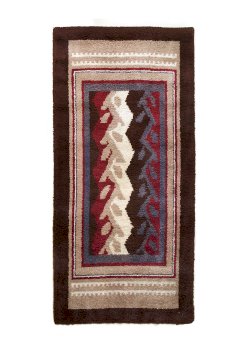

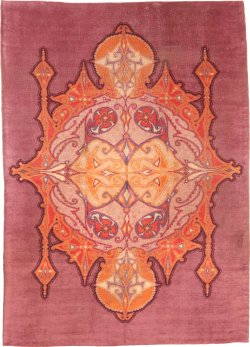
 Jaap Gidding (Rotterdam, 10 May 1887 - Hillegersberg, 23 April 1955) was a Dutch designer. He was active as a draughtsman, painter, glass painter, wall painter, decoration painter (of interiors), ceramicist, goldsmith, jewelry designer, interior designer, monumental artist, textile artist, and maker of mosaic. Gidding is best known for designing wall decorations for cine-mas and ships. For example, he designed the large rug in the central hall of the Tuschinski theatre in Am-sterdam, but also the decoration of the Trianon cinema in Leiden.