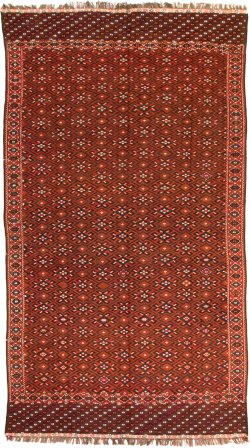
Poona rug


REF.: R19388
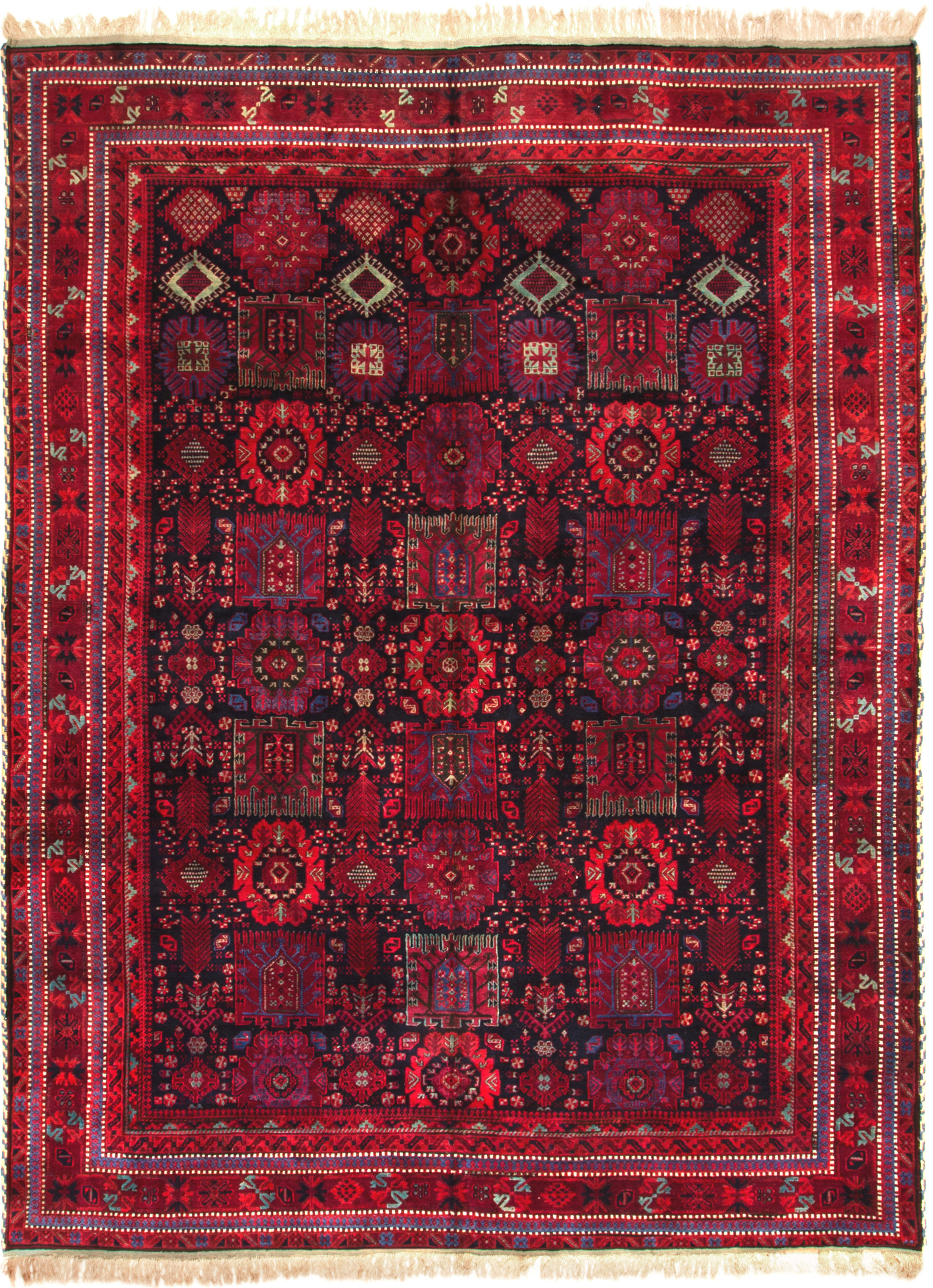
Poona rug
| Price range: | More than €25.000,00 |
| Description: | Poona rug |
| Dimensions: | L353xB270 |
| Origin: | India |
| Period: | 1880-1940 |
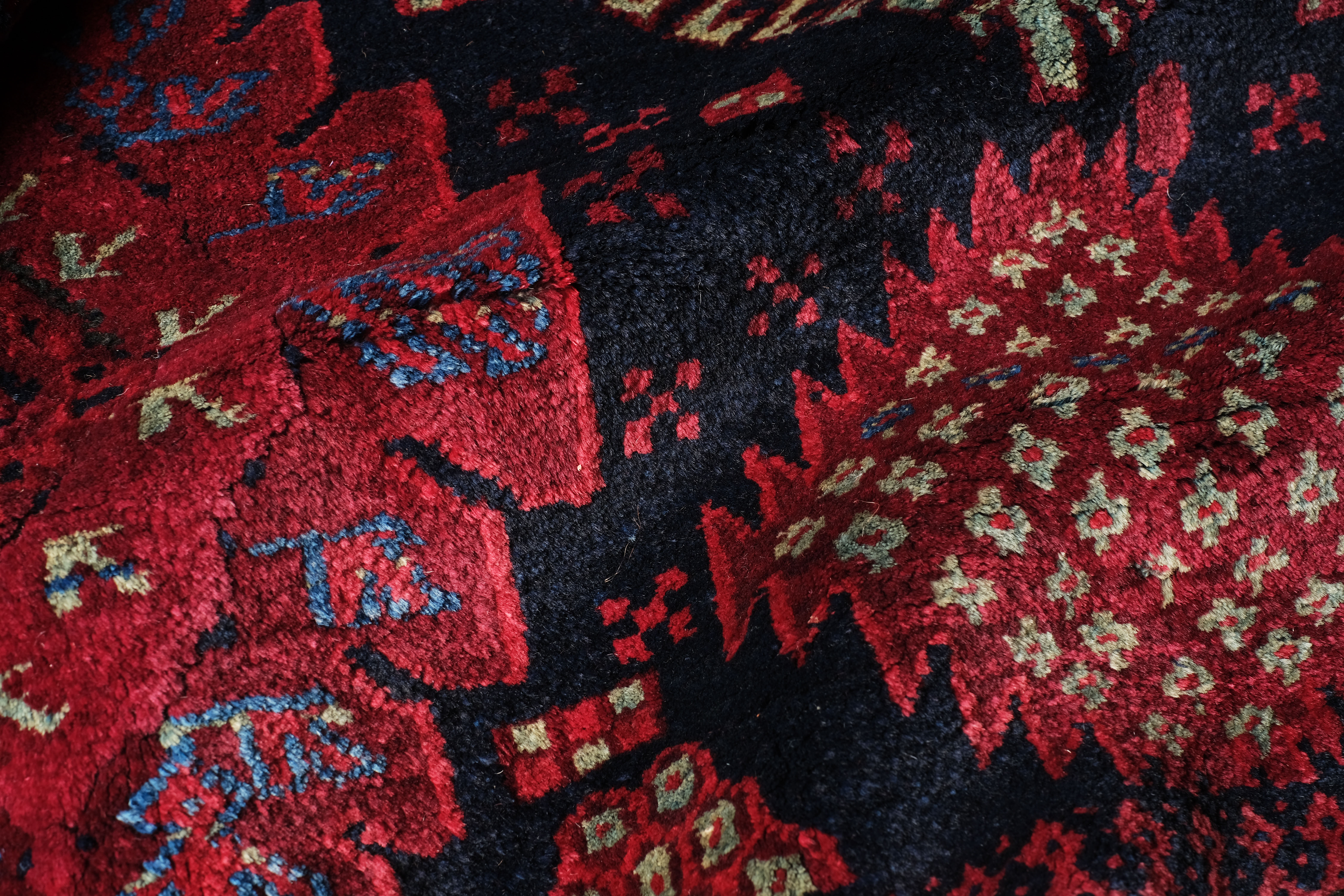
| Medium: | pile: wool / warp and weft: cotton |
| Technique: | Hand knotted |
Coulours may appear different on the website than in reality. All mentioned prices and sizes are indicative and not binding. Possibly some rugs that are still online, are not available anymore in the showroom.
Poona (Yeraoda jail ?), India
around 1900
Indian rugs produced during the second half of the 19th century are not a natural sequel to the Moghuls. There is not any direct link with village craftsmanship. The Moghul rugs, made in the court manufactories, already disappeared at the end of the 18th century.
The villagers were mostly making cotton flatweaves (dhurries). Very few knotted rugs were to be found on the marketplaces.
Only about a hundred years later, commercial motivations revived a production of hand knotted rugs. From 1860 on, the British rulers started to install looms in several jails (Agra, Amritsar, Poona, etc.) and prisoners were trained to become skilful weavers. It also became obvious that it was easier to maintain discipline and order when the prisoners had a daily occupation.
Indian rugs were shown at international exhibitions in London and Chicago (1895). Around 1900 the demand grew stronger, the production increased and inevitably quality became poorer.
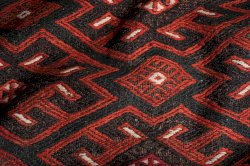
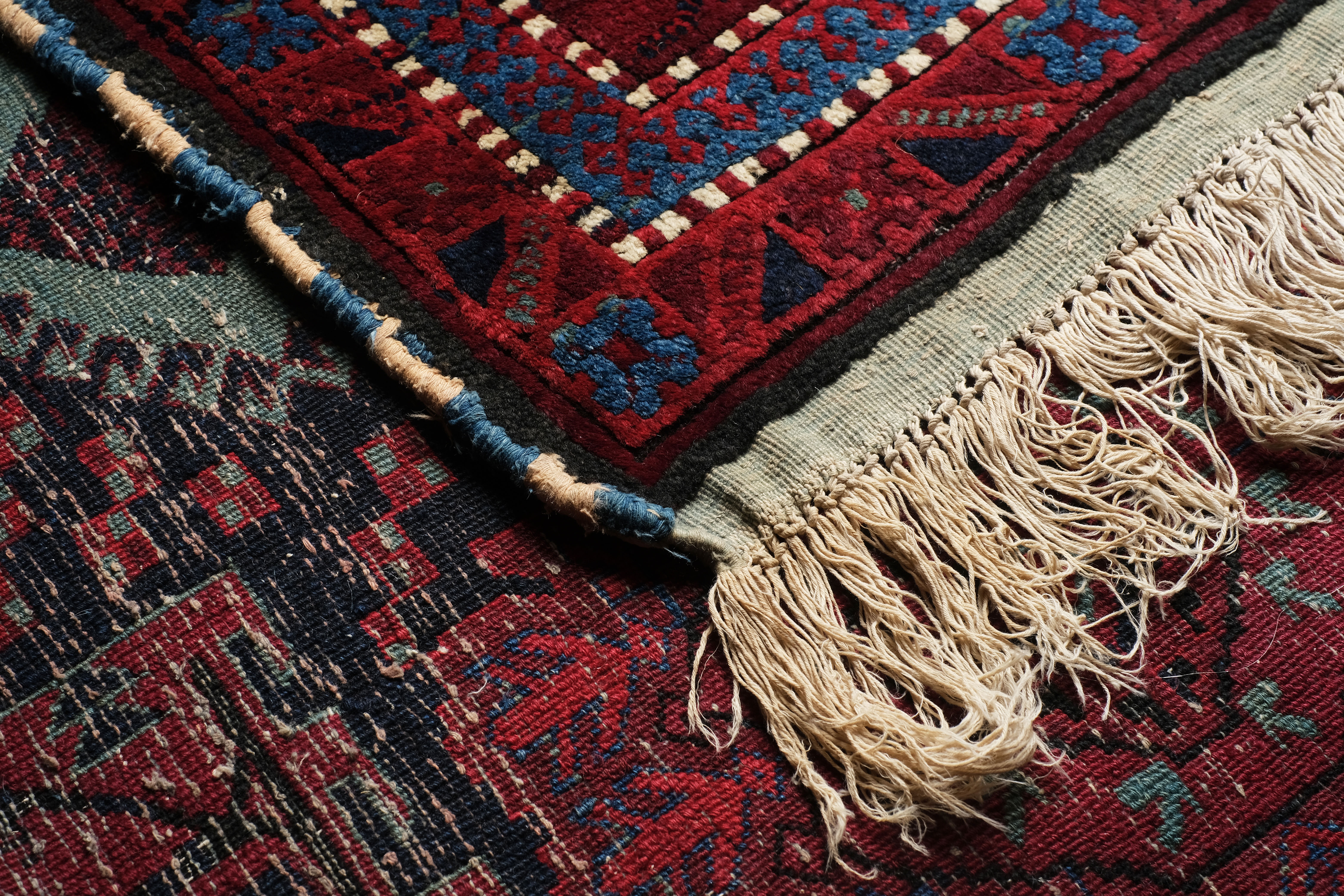
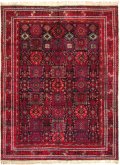
This carpet is interesting because it is one of the few pieces with a design inspired by the rugs of the Adraskand valley (Afghanistan), manufactured by the Timuri and Baluch tribes. Like most tribal rugs they were small. These Afghan goods reached India through the Sindh province. This piece was most probably made in Poona’s Yeraoda jail. The jail was known for its excellent quality, and it hardly produced more than 25 pieces in a whole year.
Indian carpets made towards the end of the 19th century are not to be considered as a natural continuation of the tradition of the Moghul court manufactures, nor do they find their origin in the traditions from the villagers.
The Moghul carpets made in limited quantities and the manufactures had disappeared by the end of the 18th century.
Rural production mainly consisted of flatweaves (dhurries) rather than knotted pieces.
Commercial prospects caused a revival of knotted carpet production in India. It was in the hands of the government between 1860 and the end of the century: looms were introduced in the jails of Lahore, Amritsar, Agra, Poona and some other cities, looms. It seemed that order and discipline could be better maintained when inmates were put to work and had a daily occupation.
The fact that some private workshops in Lahore also enjoyed a certain success is only a fringe phenomenon.
The Indian carpet was presented at the World Fairs in London and Chicago (1895). A huge demand emerged from the United States, which in the early 20th century, only continued to rise. However, this pushed up production so much that quality-standards diminished. Indian rugs gradually lost their reputation of excellence.
During the last few decades a few workshops started making efforts to improve quality.